Elite Steel Elite Steel

China Top 10 Marine Suppliers Why Choose Stainless Steel?

Time:2026-10-18 Author:Oliver
0%

China’s top 10 marine suppliers increasingly specify stainless steel for seawater-facing equipment, vessels, and offshore systems. The reason is practical. Salt spray reaches hinges, fasteners, pumps, railings, and deck fittings every day. Stainless steel can resist chloride exposure better than ordinary carbon steel when the grade, surface finish, and fabrication quality are properly selected.

The UNCTAD Review of Maritime Transport 2023 reports that more than 80% of global merchandise trade by volume moves by sea. That scale makes material reliability commercially important. The NACE IMPACT study estimated global corrosion costs at approximately US$2.5 trillion annually, equal to about 3.4% of global gross domestic product. These figures explain why marine buyers examine lifecycle costs, not only purchase prices.

This is why “Why stainless steel is preferred in marine applications” remains a relevant engineering question. Metallurgist Harold M. Cobb wrote, “Stainless steel is not a single material, but a family of materials,” in The History of Stainless Steel, published by ASM International. His point matters in marine procurement. Grade 316 offers stronger chloride resistance than 304 in many environments, while duplex grades can provide higher strength and improved resistance to stress corrosion cracking.

Still, stainless steel is not maintenance-free. Poor welding, iron contamination, stagnant water, and unsuitable fasteners can create staining or localized corrosion. That uncomfortable detail deserves attention. A reliable Chinese marine supplier should provide mill certificates, traceability, welding procedures, surface-treatment records, and application-specific grade recommendations. The best choice is not simply polished steel. It is verified steel, correctly designed and carefully maintained.
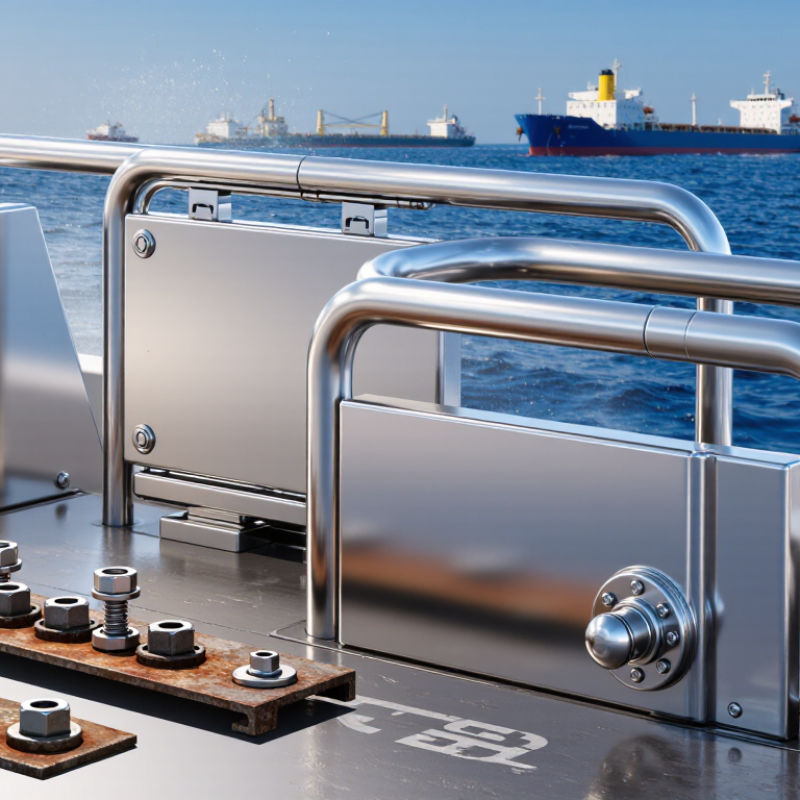
China Top 10 Marine Suppliers Why Choose Stainless Steel?

What Stainless Steel Means in Marine Equipment

China Top 10 Marine Suppliers: Why Choose Stainless Steel?

What Stainless Steel Means in Marine Equipment

In marine equipment, stainless steel means more than a bright, polished surface. It is an engineering choice for saltwater, vibration, cleaning cycles, and long service intervals. Austenitic grades, especially 316-type alloys, use chromium and molybdenum to support passive-film protection. That film can repair itself when oxygen is available. It is not magic.

The AMPP/NACE IMPACT study estimated global corrosion costs at 2.5 trillion dollars annually, about 3.4% of global GDP. Its review also suggested that 15% to 35% of corrosion costs could be avoided through better prevention. For shipboard pumps, fasteners, railings, valve bodies, and food-contact surfaces, correct stainless selection can reduce repainting, shutdowns, and replacement work. The benefit is practical: fewer rust flakes near a deck drain and fewer seized bolts during inspection.

However, marine stainless steel still needs design discipline. Chlorides can cause pitting and crevice corrosion, especially beneath gaskets, deposits, and poorly drained joints. Maritime classification guidance emphasizes material compatibility, fabrication quality, and inspection planning. Welding can also reduce local corrosion resistance if heat tint remains untreated. Specifications sometimes focus on grade names while ignoring surface finish and drainage. That is a costly blind spot. Stainless steel performs best when engineers control contamination, isolate dissimilar metals, and allow water to escape. A cheaper alloy may look efficient on paper. Maintenance records often tell a harsher story.

Why Stainless Steel Resists Corrosion in Marine Environments

For China’s top marine suppliers, stainless steel is valued for more than its bright surface. Its chromium content forms a thin, self-repairing passive film when oxygen is available. This film slows chloride-driven corrosion in seawater, spray zones, and humid engine spaces. The NACE IMPACT study estimated global corrosion costs at 2.5 trillion US dollars annually, equal to about 3.4% of global GDP. Better material selection can reduce avoidable losses.

Not all stainless steel performs equally offshore. Austenitic grades containing molybdenum usually resist pitting better than basic chromium-nickel grades. Their performance depends on chloride concentration, temperature, oxygen levels, and surface condition.

Weld heat tint can weaken local protection. Salt may collect around a poorly drained flange.

Small details matter.

Marine engineers should inspect crevices, fasteners, welds, and stagnant water traps. The European Federation of Corrosion links good design and corrosion control with significant lifecycle savings, often estimated between 15% and 35%. However, that figure is not automatic. A careless specification can still produce early staining or pitting.

Stainless steel needs clean fabrication, suitable grades, smooth drainage, and periodic freshwater washing.

In my experience, maintenance teams often blame the alloy first. The real problem is frequently trapped salt, contaminated tools, or an unsuitable joint design.

Corrosion resistance is engineered, not simply purchased.

How China’s Top 10 Marine Suppliers Use Stainless Steel

Across China’s top 10 marine suppliers, stainless steel is selected for more than its bright appearance. It resists seawater, humidity, impact, and repeated cleaning. Suppliers commonly use 316L stainless steel for railings, deck fittings, fasteners, and exposed equipment. Its molybdenum content offers stronger resistance to chloride corrosion than standard 304 steel.

Details matter at sea. Experienced suppliers specify material certificates, inspect weld penetration, and check surface finishing before delivery. Smooth welds reduce salt deposits and make maintenance easier. On a working vessel, a poorly finished joint can collect grime within weeks. That small defect may become expensive later.

Testing is practical, not decorative. Suppliers may review salt-spray results, hardness records, dimensional reports, and traceability documents. They also match thickness and grade to the vessel’s operating environment. Coastal service differs from offshore service. So does warm, highly saline water.

Stainless steel is not a magic shield. I have seen corrosion appear around carbon-steel contamination, damaged coatings, and hidden crevices. Better suppliers explain these risks instead of promising perfect performance. They also recommend freshwater rinsing, regular inspections, and careful separation from dissimilar metals. This honest approach supports safer decisions, although some specifications still need closer technical review.

Which Marine Products Benefit Most from Stainless Steel

Marine products benefit most from stainless steel when salt, spray, and repeated handling create constant wear. Deck railings, ladders, cleats, fasteners, hose fittings, and drainage covers are strong examples. Marine maintenance teams often specify 316L for exposed hardware because molybdenum improves resistance to chloride pitting. Duplex stainless steel suits seawater piping and structural supports when higher strength is required. It can reduce material weight, but welding quality becomes critical. Small defects may become expensive problems.

World Stainless reported 58.4 million tonnes of crude stainless steel production in 2023, showing the material’s broad industrial relevance. The International Maritime Organization’s 2023 greenhouse-gas strategy also targets net-zero emissions from international shipping around 2050. Longer-lasting components can support this direction by reducing replacement work, waste, and vessel downtime. However, stainless steel is not maintenance-free. Crevice corrosion can appear beneath gaskets, deposits, or poorly drained brackets. Galvanic corrosion may also develop when stainless fasteners contact aluminum. ISO 9223 exposure principles and ASTM G48 pitting tests help engineers compare material performance, but laboratory results cannot reproduce every harbor. A practical specification should include alloy grade, surface finish, welding method, drainage design, and inspection access. That detail is often missed.

China Top 10 Marine Suppliers: Why Choose Stainless Steel?

Marine products that benefit most from corrosion-resistant stainless steel and high mechanical strength

Stainless steel is especially valuable in marine fasteners, railings, fittings, pump and valve components, and seawater piping. The chart compares the minimum tensile strength specified for commonly used stainless steel grades: 316/316L at 515 MPa, duplex 2205 at 620 MPa, and super duplex 2507 at 795 MPa. Grade selection should also consider chloride exposure, welding requirements, temperature, and applicable standards.

How to Evaluate Stainless Steel Marine Suppliers

How to Evaluate Stainless Steel Marine Suppliers

China’s marine suppliers serve a demanding market, where salt spray, welding quality, and delivery discipline matter. UNCTAD’s Review of Maritime Transport 2024 recorded 12.3 billion tonnes of seaborne trade in 2023. That scale increases pressure on vessel components and replacement schedules.

Start with material evidence, not attractive catalogs. A reliable supplier should provide heat numbers, mill test certificates, chemical analysis, and mechanical results. Check whether certificates match the delivered plate, pipe, or fitting. Portable positive material identification testing can expose grade mistakes at the warehouse. It is a small step. It prevents expensive rework.

Ask about corrosion testing and marine fabrication experience. Weld procedures should identify filler metals, heat input, inspection methods, and operator qualifications. ISO 9001 certification supports process control, but it does not prove marine performance alone. Request recent inspection records and references for similar seawater applications. The 2024 World Stainless Association report estimated global stainless steel production at 58.4 million tonnes in 2023, showing a large and competitive supply base. Competition helps pricing, yet it can hide uneven traceability. I have seen technically correct quotations fail because packaging allowed moisture damage during transport. Evaluate export packing, dimensional inspection, lead times, and corrective-action records. A lower price is not necessarily lower risk.

China Top 10 Marine Suppliers Why Choose Stainless Steel? - How to Evaluate Stainless Steel Marine Suppliers

Evaluation Dimension Verified Technical Benchmark Why It Matters for Marine Applications Recommended Supplier Evidence
1. Stainless Steel Grade Selection Common grades
304 contains approximately 18% chromium and 8% nickel. 316/316L typically contains approximately 16–18% chromium, 10–14% nickel and 2–3% molybdenum. Duplex 2205 generally contains approximately 22% chromium, 4.5–6.5% nickel and 3% molybdenum.
Molybdenum improves resistance to chloride pitting, while duplex stainless steel offers higher strength than standard austenitic grades. Material test report showing chemical composition, heat number, grade designation and applicable specification.
2. Chloride Corrosion Resistance PREN indicator
The Pitting Resistance Equivalent Number is commonly estimated as PREN = %Cr + 3.3 × %Mo + 16 × %N. Typical approximate values are 18–20 for 304, 23–25 for 316L and 30–35 for duplex 2205.
Seawater and salt spray contain chlorides that can cause pitting and crevice corrosion, especially in stagnant or poorly drained areas. Certified chemistry report, corrosion-test records where applicable, and a grade recommendation based on salinity, temperature and exposure conditions.
3. Mechanical Strength ASTM A240 minimums
Annealed 304 and 316/316L plate commonly require at least 515 MPa tensile strength and 205 MPa yield strength. Duplex 2205 commonly requires at least 620 MPa tensile strength and 450 MPa yield strength.
Adequate strength is necessary for marine frames, brackets, tanks, ladders, fasteners and components exposed to vibration or wave loading. Mill test certificate listing tensile strength, yield strength, elongation, test direction and product thickness.
4. Low-Carbon Weldability 316L carbon limit
316L has a maximum carbon content of 0.030% under common ASTM product specifications, reducing the risk of sensitization during welding compared with standard 316, which commonly permits up to 0.080% carbon.
Correct low-carbon material and qualified welding procedures help preserve corrosion resistance around welded joints. Welding procedure specification, welder qualification records, filler-metal certificates and post-weld inspection reports.
5. Product Standards and Traceability Recognized standards
Typical references include ASTM A240 for stainless steel plate, sheet and strip, EN 10088-2 for stainless steel flat products, and ASTM A276 for stainless steel bars and shapes.
Standards define chemical, mechanical, dimensional and testing requirements, making products easier to compare across projects. Heat-number traceability from raw material to finished product, standard designation, inspection certificate and batch records.
6. Surface Finish and Cleanliness Finish examples
Common stainless steel finishes include No. 1 hot-rolled, 2B cold-rolled and No. 4 brushed. The required finish should be stated together with surface-cleaning and passivation requirements.
Smooth, clean surfaces reduce locations where salt, deposits and moisture can accumulate and improve inspection and maintenance. Approved finish samples, surface-inspection criteria, passivation records and restrictions on carbon-steel contamination.
7. Dimensional Accuracy Purchasing control
Confirm thickness, width, length, diameter, flatness, straightness and permitted tolerances against the selected ASTM, EN or project specification.
Accurate dimensions reduce fabrication time, installation problems, material waste and the need for on-site modification. Dimensional inspection report, calibrated measuring-equipment records and a documented sampling plan for each production lot.
8. Non-Destructive and Visual Testing Inspection options
Depending on the component, verification may include visual inspection, ultrasonic testing, liquid penetrant testing, radiographic testing and PMI for alloy identification.
Inspection can identify laminations, surface cracks, weld defects, incorrect alloy content and other problems before shipment or installation. Inspection and test plan, NDT procedures, personnel qualifications, test reports and nonconformance records.
9. Marine-Specific Fabrication Capability Process capability
Relevant capabilities may include laser or plasma cutting, bending, CNC machining, TIG/MIG welding, pickling, passivation, electropolishing and controlled packaging.
A supplier that controls fabrication and finishing can reduce handling damage, dimensional variation and corrosion caused by poor post-weld treatment. Process flow chart, equipment list, production capacity, sample inspection records and photographs of comparable marine components without proprietary details.
10. Delivery, Packaging and Documentation Shipment readiness
A complete order package should define lead time, Incoterms, packing method, moisture protection, marking, quantity control and required quality documents.
Stainless steel can be damaged by impact, seawater exposure and contact with carbon steel during transport. Complete documentation supports receiving inspection and regulatory review. Agreed production schedule, packing specification, commercial invoice, packing list, certificate of origin, material certificates and final inspection dossier.

Note: Chemical compositions and mechanical values are representative minimums or typical ranges associated with widely used stainless steel specifications. Final acceptance criteria should always be confirmed against the exact product standard, grade, thickness, fabrication method and marine project specification.

FAQS

Why is 316L stainless steel widely used in marine equipment?

316L resists seawater, humidity, and chloride corrosion better than standard 304 steel. It suits railings, fasteners, deck fittings, and exposed hardware. Not a magic shield. Poor drainage can still cause corrosion.

Which marine products benefit most from stainless steel?

Railings, ladders, cleats, hose fittings, fasteners, and drainage covers benefit greatly. These parts face salt spray, impact, handling, and repeated cleaning. Smooth surfaces collect less grime. Hidden crevices still need inspection.

Is stainless steel completely maintenance-free?

No. Deposits, damaged coatings, and tight crevices can create corrosion sites. Freshwater rinsing helps remove salt from exposed surfaces. Regular inspections remain necessary. I would not trust a “zero maintenance” promise.

What documents should a marine supplier provide?

Request material certificates, heat numbers, chemical results, and mechanical test records. The documents should match the delivered pipe, plate, or fitting. Traceability matters. A certificate alone may not prove quality.

How can buyers verify the stainless steel grade?

Buyers can compare certificates with the delivery markings and purchase specifications. Portable material identification testing can detect grade errors at the warehouse. This check takes little time. It may prevent costly rework.

What welding details should buyers review?

Review welding procedures, filler metals, heat input, inspection methods, and operator qualifications. Ask whether weld penetration was inspected before shipment. Smooth welds reduce salt deposits. Small defects matter.

Does a higher price always mean better marine performance?

No. Price does not prove traceability, welding quality, or suitable packing. A cheaper quotation may create moisture damage during transport. Check packaging, dimensions, delivery timing, and corrective actions. The lowest price can become expensive.

How should buyers choose between 316L and duplex stainless steel?

316L suits many exposed marine fittings and general seawater environments. Duplex stainless steel can provide higher strength for piping and structural supports. Its welding quality requires closer control. The correct choice depends on salt level, temperature, loads, and access.

Conclusion

Stainless steel has become a trusted material in marine equipment because it combines strength, durability, and a clean, professional appearance. The key question, “Why stainless steel is preferred in marine applications,” can be answered through its strong resistance to moisture, salt spray, oxidation, and daily mechanical stress. Its protective chromium-rich surface helps reduce corrosion, while proper grades and regular maintenance improve performance in demanding coastal and offshore environments.

China’s top 10 marine suppliers commonly apply stainless steel to products such as railings, fittings, fasteners, ladders, hinges, deck hardware, pipes, and structural components. These products benefit from stainless steel’s long service life, low maintenance needs, and ability to withstand changing weather conditions. When evaluating marine suppliers, buyers should consider material grade, manufacturing precision, welding quality, surface treatment, customization capability, inspection procedures, delivery reliability, and after-sales support. A dependable supplier should also provide clear technical specifications and consistent quality control.

Oliver

Oliver

Oliver is a seasoned marketing professional with a wealth of expertise in driving brand awareness and engagement. With a deep understanding of our company's product offerings, he consistently delivers high-quality content that enriches our professional blog. His insights not only shed light on......