Elite Steel Elite Steel

What Are the Top Stainless Steel Kitchen Advantages in 2026?

Time:2026-09-18 Author:Mason
0%

In 2026, stainless steel remains a practical choice for modern kitchens. Its clean surface suits homes, restaurants, schools, and healthcare facilities. Yet appearance is only part of the story. Daily cooking creates heat, moisture, grease, and constant contact with food. Stainless steel handles these pressures better than many decorative materials.

What are the advantages of stainless steel in kitchens? The answer begins with durability. Quality stainless steel resists rust, stains, impact, and repeated cleaning when properly selected and maintained. Common 304-grade steel performs well in most indoor kitchens, while 316-grade steel offers stronger corrosion resistance in demanding environments. These differences matter. A professional installer should consider humidity, chemicals, temperature, and expected use before recommending a grade.

It also supports food hygiene. Its nonporous surface gives bacteria fewer places to hide, especially when seams are smooth and damage is limited. Cleaning still matters. Stainless steel is not automatically germ-free. Warm water, suitable detergent, and a soft cloth usually protect its finish better than harsh abrasives. In my experience, brushed surfaces hide small marks more effectively than mirror finishes. However, they can still show fingerprints near handles and refrigerators.

Long service life may reduce replacement waste and maintenance costs. The material can also be recycled through established metal recovery systems. Still, sustainability depends on manufacturing, transportation, thickness, and eventual disposal. That is an important limitation. Stainless steel is strong, but it is not flawless. This guide examines its advantages, practical weaknesses, care requirements, and value for kitchens built for 2026 and beyond.
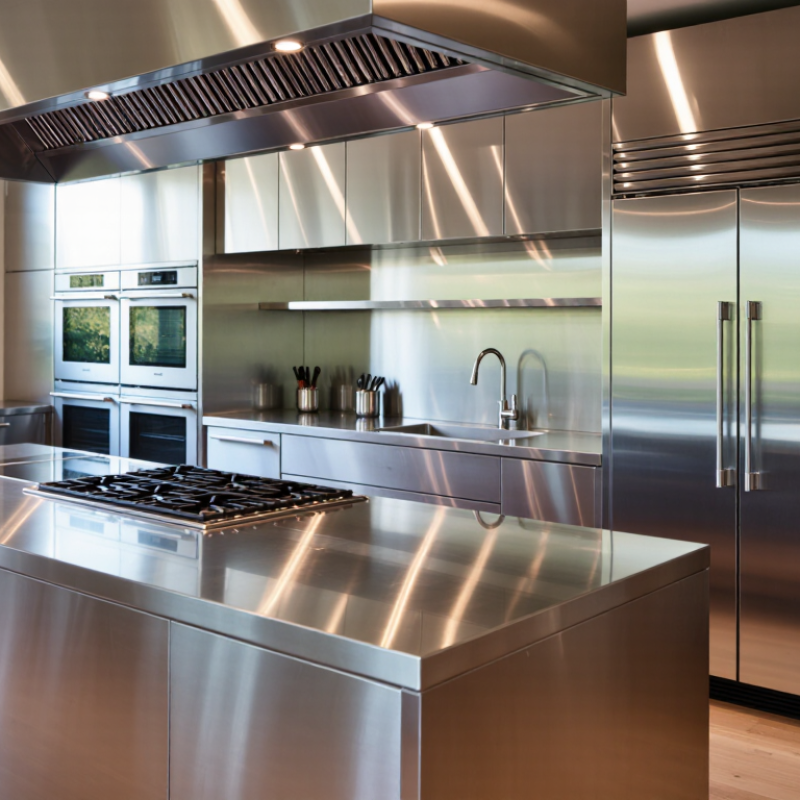
What Are the Top Stainless Steel Kitchen Advantages in 2026?

What Is Stainless Steel and Why Is It Used in Kitchens?

Stainless steel is not pure steel. It is an iron-based alloy containing at least 10.5% chromium, according to ISO 15510. Chromium reacts with oxygen and forms a thin passive film. This invisible layer helps resist rust and staining. It can repair itself when exposed to air. That sounds perfect, but it is not indestructible. The International Stainless Steel Forum reported 58.4 million metric tons of global stainless steel production in 2023. This scale reflects its importance across construction, food processing, and kitchen equipment.

Kitchens use stainless steel because it is nonporous, heat-resistant, and relatively easy to sanitize. Food particles cannot easily enter a properly finished surface. NSF/ANSI 51 establishes material and surface requirements for commercial food equipment. Fabrication still matters. Poor welds, rough seams, and trapped moisture can weaken hygiene performance. In everyday use, grade 304 suits many indoor kitchens. Grade 316 contains molybdenum and offers stronger resistance in salty or chloride-rich environments. The right grade depends on location, cleaners, water quality, and cooking habits.

It still needs care. Harsh chloride cleaners can damage the passive film. Steel wool may leave scratches that collect residue. A damp cloth left beside a sink can create tea-colored marks. These details are easy to ignore. I once assumed “stainless” meant maintenance-free, which was an incomplete judgment. Good ventilation, prompt drying, and proper cleaning protect both appearance and performance. Surface finish deserves attention, too. A shiny panel may look impressive, but a brushed finish can hide minor marks better in busy kitchens.

What Are the Top Stainless Steel Kitchen Advantages in 2026?

Stainless steel is an iron-based alloy containing at least 10.5% chromium. The chromium forms a thin, self-healing oxide layer that helps protect the surface from corrosion, making stainless steel widely used for cookware, sinks, worktops, and food-contact equipment.

Why this matters in kitchens: Stainless steel has much lower thermal conductivity than copper and aluminum, so it transfers heat more slowly and offers better control of heat movement through cookware and kitchen surfaces. It is also non-porous, durable, easy to clean, and resistant to rust when properly maintained.

How Does Stainless Steel Improve Kitchen Hygiene and Food Safety?

What Are the Top Stainless Steel Kitchen Advantages in 2026?

How Does Stainless Steel Improve Kitchen Hygiene and Food Safety?

Stainless steel supports safer food preparation because its surface is nonporous, smooth, and corrosion-resistant. The FDA Food Code 2022 recommends food-contact surfaces that are durable, nonabsorbent, and easily cleanable. These characteristics help prevent grease, moisture, and food particles from settling into hidden pores. A clean surface matters.

During daily kitchen inspections, worktops, sinks, and refrigerator handles often reveal the real hygiene challenge. Stainless steel makes these areas easier to wipe, rinse, and sanitize. However, it is not magic. Scratches, welded seams, damaged joints, and neglected corners can still collect residue. Poor cleaning habits can defeat a good material.

The World Health Organization estimated that contaminated food caused about 600 million illnesses and 420,000 deaths globally in 2015. That figure shows why material selection deserves attention. Stainless steel can reduce cleaning obstacles, but it cannot replace temperature control or hand hygiene. The surface should be washed with suitable detergent, rinsed, sanitized, and dried according to local food-safety procedures. NSF/ANSI 51 also sets requirements for materials used in commercial food equipment, including corrosion resistance and cleanability. In practice, operators should inspect brushed finishes closely, because decorative grooves may retain soil more easily than smooth finishes. That detail is easy to overlook.

What Makes Stainless Steel Kitchens Durable and Easy to Maintain?

In a busy kitchen, stainless steel earns its reputation through repeated, ordinary use. Steam, splashes, knife work, and hot pans rarely cause permanent damage to its surface. Its chromium-rich layer helps resist corrosion when the surface receives normal care. That matters near sinks, dishwashers, and cooking areas where moisture stays present.

The material is nonporous, so food residue cannot easily soak inside. A soft cloth, warm water, and mild detergent usually remove grease and fingerprints. Wiping with the grain can improve the finish. Drying the surface also prevents water spots, especially in hard-water homes. In professional kitchens, this simple routine supports better hygiene between preparation tasks.

Still, stainless steel is not maintenance-free. Salt, bleach, and harsh scouring pads can stain or scratch it. I have seen a clean counter look neglected because small droplets dried along the edges. Welded corners need attention, too. Poorly finished joints may collect crumbs and moisture. This is where installation quality becomes as important as the metal itself. A durable kitchen depends on suitable thickness, smooth seams, correct cleaners, and regular inspection. Scratches may appear over time, but many become less noticeable as the surface develops a consistent working character.

What Are the Top Stainless Steel Kitchen Advantages in 2026? — What Makes Stainless Steel Kitchens Durable and Easy to Maintain?
Performance Dimension Typical Stainless Steel Characteristic Kitchen Advantage Practical Maintenance Guidance
Corrosion Resistance Chromium content of at least approximately 10.5% enables a passive protective oxide layer. Helps protect sinks, countertops, splashbacks, and appliances from moisture and everyday oxidation. Wipe away salt, acidic food residue, and standing water instead of allowing them to remain on the surface for long periods.
Common Material Grades Grade 304 is widely used for general indoor kitchens; grade 316 offers greater resistance in chloride-rich environments. Allows the material to be selected according to humidity, salt exposure, cleaning conditions, and location. Confirm the grade and surface finish before installation, especially for coastal or high-salt environments.
Hygiene and Cleanability A smooth, non-porous surface does not readily absorb liquids or food particles. Supports effective cleaning and reduces places where bacteria, grease, and odors can accumulate. Use warm water, mild detergent, and a soft cloth; clean in the direction of the brushed grain.
Heat Resistance Stainless steel is non-combustible and tolerates normal kitchen heat, although extreme heat can discolor or deform thin sections. Suitable for areas near cooktops, ovens, sinks, and other heat-producing equipment. Use trivets for extremely hot cookware and avoid directing high heat at thin panels or sealed joints.
Impact and Wear Resistance Tough metal construction resists chipping, cracking, and peeling better than many brittle or coated surfaces. Provides reliable performance in busy kitchens and high-use preparation areas. Choose an appropriate sheet thickness and avoid dragging heavy cookware across visible surfaces.
Moisture Tolerance The material does not swell or rot when exposed to ordinary kitchen moisture. Works well for sinks, wet zones, dishwashing areas, and frequently cleaned surfaces. Keep seams, edges, fasteners, and surrounding substrates properly sealed to prevent water intrusion behind the metal.
Chemical Resistance Resists many household cleaning agents, but concentrated chlorides, strong acids, and abrasive chemicals can damage the passive layer. Maintains appearance under routine cleaning when compatible products are used. Avoid chlorine bleach residue, hydrochloric acid, steel wool, and abrasive scouring powders unless specifically approved for the surface.
Repairability Minor marks and light scratches can often be blended or polished, depending on the finish and depth. Reduces the need for complete replacement after ordinary cosmetic wear. Use non-abrasive cleaning tools and repair scratches along the existing grain rather than across it.
Service Life Well-designed and properly installed stainless steel components can remain functional for many decades. Supports long-term kitchen value and can reduce replacement frequency. Inspect joints, seals, drains, and mounting points periodically; service life depends on grade, thickness, environment, and workmanship.
Recyclability Stainless steel is a recyclable metal and can be recovered at the end of its useful life. Can support lower material waste and more circular renovation practices. Separate metal components from non-metal attachments when a kitchen is dismantled or renovated.
Appearance Retention Brushed, satin, and polished finishes offer different levels of reflectivity and visibility of fingerprints or scratches. Provides a contemporary appearance that can coordinate with many kitchen layouts. Select a finish suited to usage: textured or brushed finishes generally conceal everyday marks better than highly polished finishes.
Maintenance Frequency Routine cleaning is usually sufficient; frequency depends on cooking volume, water quality, and exposure to grease or salt. Offers a relatively simple care routine compared with porous materials that require sealing. Clean spills promptly, dry the surface after washing, and perform a deeper clean whenever grease or mineral deposits become visible.
Note: Performance varies with stainless steel grade, thickness, surface finish, fabrication quality, installation conditions, and cleaning practices.

How Do Stainless Steel Surfaces Support Modern Kitchen Design?

Stainless steel surfaces help modern kitchens look precise without feeling overly decorated. Their soft reflection catches daylight, while slim seams support clean islands, counters, and backsplashes. In daily use, the material tolerates heat, moisture, and frequent wiping. That matters near a steaming kettle or a sink splashed with lemon water.

The 2024 NKBA Kitchen Trends Report identifies easy maintenance and cleanability as major design priorities. Stainless steel supports both, but it is not maintenance-free. Fingerprints show easily, especially on polished finishes. A brushed surface hides them better, although its grain needs consistent wiping. Use a microfiber cloth and clean with the grain.

The International Stainless Steel Forum reports that over 90% of stainless steel reaches recycling systems at the end of its service life. That circular potential strengthens its role in durable kitchen planning. However, recycled content and recovery rates vary by region and product construction. Designers should request verified material information, not rely on vague environmental claims.

Stainless steel also creates visual continuity. The same finish can connect a worktop, extractor surround, shelf brackets, and cabinet handles. Yet too much metal may make a room feel cold. Warm timber, textured plaster, or matte ceramic can soften the effect. The best result is not a spotless showroom. It is a practical surface that still looks intentional after real cooking.

What Should Buyers Consider Before Choosing Stainless Steel Kitchen Features?

Before choosing stainless steel kitchen features, buyers should examine the material, not only its polished appearance. Grade 304 suits most indoor kitchens and resists everyday moisture well. Grade 316 may offer better protection in coastal or high-chloride environments. Ask for documented specifications instead of trusting vague descriptions. Looks matter, but performance matters longer.

Thickness affects stability, noise, and the feel of a worktop. A thin sink may sound harsh when water hits it. Request sound-absorbing pads or an insulated underside. Inspect welds closely. Smooth, continuous seams are easier to clean than rough joints that collect food particles.

Brushed finishes can hide light scratches, while mirror finishes show fingerprints quickly. I once chose a reflective backsplash for a renovation, and daily wiping became annoying. It looked impressive under showroom lights.

Buyers should also check installation details. Heavy counters may need stronger cabinets and careful wall support. Measure appliance openings before ordering custom panels. Confirm whether edges are folded, welded, or simply capped. Cleaning instructions deserve attention too. Chloride cleaners and standing salty water can damage stainless steel over time. Use a soft cloth and rinse chemical residue thoroughly. Maintenance is simple, not effortless. Budget for professional fitting when seams, sinks, or integrated drains are involved. A lower initial price can become expensive after uneven joints, visible dents, or difficult repairs appear.

FAQS

How does stainless steel support kitchen hygiene?

Its smooth, nonporous surface does not easily absorb grease, moisture, or food particles.

Can stainless steel prevent food contamination by itself?

No. It cannot replace handwashing, safe temperatures, or careful food handling.

Which stainless steel areas need the closest cleaning?

Inspect sinks, worktops, refrigerator handles, corners, seams, and welded joints.

Is a smooth finish better than a brushed finish?

Smooth finishes usually provide fewer grooves for soil to collect.

How should stainless steel surfaces be cleaned?

Use a suitable detergent, rinse away residue, sanitize, and dry the surface.

What should buyers check before choosing stainless steel features?

Check the material grade, thickness, weld quality, edge design, and cleaning instructions.

How can buyers reduce noise from stainless steel sinks?

Choose sound-absorbing pads or an insulated underside.

Does stainless steel always create a warm kitchen atmosphere?

Not always. Too much metal can make a room feel cold and overly industrial.

Is stainless steel environmentally responsible?

Its durability and recyclability can support longer-lasting kitchen planning.

Conclusion

Stainless steel remains a leading choice for modern kitchens because it combines practical performance with a clean, professional appearance. What are the advantages of stainless steel in kitchens? Its nonporous surface helps resist the absorption of moisture, odors, and food residue, making it easier to clean and supporting better hygiene and food safety. When properly maintained, stainless steel also withstands heat, frequent use, corrosion, and everyday impacts, providing long-term value for both residential and commercial kitchens.

Beyond durability, stainless steel offers design flexibility. Its neutral finish works well with many colors, materials, and contemporary layouts, while reflective surfaces can make a kitchen feel brighter and more spacious. Buyers should still consider factors such as thickness, surface finish, installation quality, noise, fingerprints, and cleaning requirements before choosing stainless steel features. Selecting suitable specifications and maintaining them with gentle, non-abrasive products can help preserve their appearance and performance for years.

Mason

Mason

Mason is a seasoned marketing professional with a deep expertise in the company's offerings and a passion for driving brand awareness. With a strong background in digital marketing strategies, he has an innate ability to connect with diverse audiences and effectively communicate product benefits.......