Corrosion resistance is a critical characteristic of stainless steel. Understanding what factors affect stainless steel corrosion resistance is essential for various industries. Corrosion can lead to significant economic losses. According to the National Association of Corrosion Engineers, corrosion costs the U.S. economy over $276 billion annually.
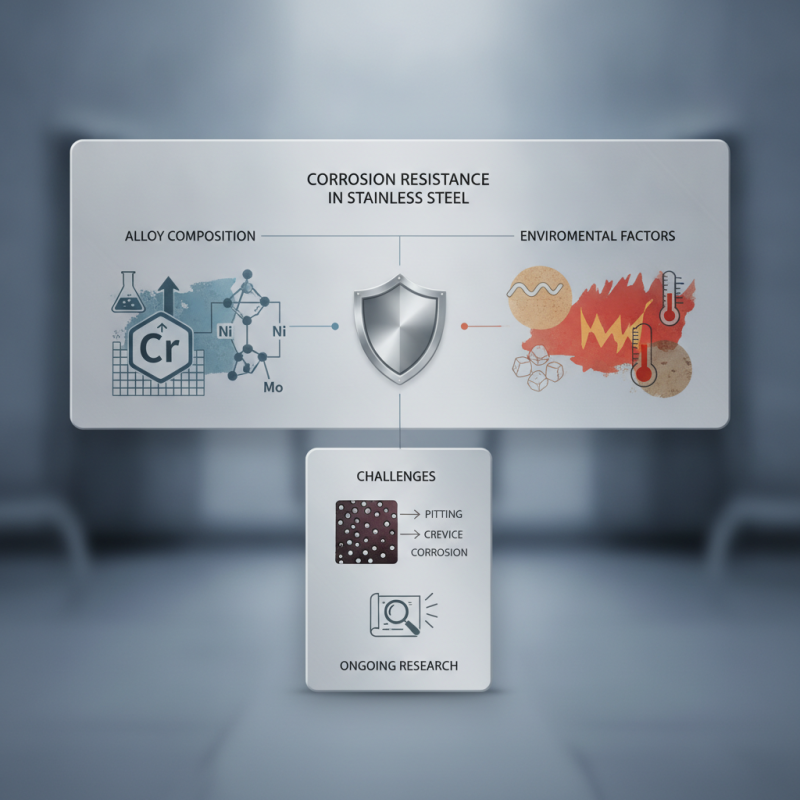
Several key factors influence corrosion resistance. The alloy composition of stainless steel plays a vital role. Higher chromium content typically enhances corrosion resistance. Other elements, like nickel and molybdenum, also contribute to this property. Environmental factors cannot be overlooked. Humidity, salinity, and temperature significantly impact corrosion rates.
Despite advancements in metallurgy, challenges remain. Some stainless steels still experience localized corrosion. Pitting and crevice corrosion can occur in aggressive environments. These issues highlight the need for ongoing research and tailored solutions in corrosion management. Understanding the intricate balance of these factors is vital for industries relying on stainless steel longevity.
Overview of Corrosion Resistance in Stainless Steel
Corrosion resistance in stainless steel is a vital property that influences its application across various industries. This resistance is mainly attributed to the chromium content in stainless steel. When exposed to oxygen, chromium forms a protective oxide layer. This layer helps prevent further oxidation and corrosion. However, the quality of this layer can be influenced by several factors.
The environmental conditions play a crucial role in corrosion resistance. High humidity, salinity, and temperature can accelerate corrosion. For instance, coastal areas may pose a greater risk due to saltwater exposure. Furthermore, different grades of stainless steel exhibit varying resistance levels. Some may perform better in specific environments, while others might not withstand harsh conditions. This variation can lead to unexpected failures in high-stress applications.
Additionally, factors such as surface finish and mechanical stress can affect the integrity of the protective layer. Rough surfaces may harbor contaminants that facilitate corrosion. Mechanical stress can lead to micro-cracks, which allow corrosive agents to penetrate. Regular maintenance and proper material selection are essential for maximizing corrosion resistance. It is essential to evaluate these factors for effective corrosion management.
Chemical Composition and its Impact on Corrosion Resistance
The chemical composition of stainless steel plays a crucial role in its corrosion resistance. Elements like chromium, nickel, and molybdenum significantly enhance this property. Chromium forms a thin oxide layer, protecting the steel from rust. This layer must be intact for maximum effectiveness. If this layer is compromised, corrosion can occur quickly.
Different grades of stainless steel have varying compositions. For instance, higher chromium content generally leads to better resistance. However, too much chromium can make the material brittle. Nickel also adds toughness but may reduce resistance in certain environments. Molybdenum helps in resisting pitting corrosion, especially in chloride-rich environments.
Understanding the balance of these elements is key. Each composition choice has its trade-offs. For example, increasing nickel improves toughness but can add to costs. It’s essential to consider the specific application and environment when selecting stainless steel. This reflection on composition is vital for durability and longevity.
What Factors Influence Corrosion Resistance in Stainless Steel? - Chemical Composition and its Impact on Corrosion Resistance
| Stainless Steel Grade |
Key Alloying Elements |
Corrosion Resistance (Rating) |
Common Applications |
| 304 |
Ni 8-10.5%, Cr 18-20% |
Good |
Food industry, kitchen equipment |
| 316 |
Ni 10-14%, Cr 16-18%, Mo 2-3% |
Very Good |
Marine applications, chemical processing |
| 430 |
Cr 16-18% |
Fair |
Automotive trim, architectural applications |
| Duplex 2205 |
Ni 4.5-6.5%, Cr 22-23%, Mo 3-5% |
Excellent |
Oil and gas industry, offshore platforms |
| 254SMO |
Ni 18-20%, Cr 20-22%, Mo 6-7% |
Outstanding |
Pulp and paper, seawater applications |
Environmental Factors Affecting Stainless Steel Corrosion
Corrosion resistance in stainless steel is heavily influenced by environmental factors. Conditions such as moisture, salt concentration, and temperature play significant roles in determining the lifespan of the material. For instance, coastal areas expose stainless steel to higher salt levels, which can accelerate corrosion. Moreover, high humidity increases the risk of moisture accumulation on the surface, leading to localized pitting.
Tips: Regular maintenance is crucial. Inspect stainless steel components regularly, especially in corrosive environments. Address any signs of wear early to prevent serious damage.
Pollutants also affect corrosion rates. Industrial emissions and chemical spills introduce harmful substances that can compromise the protective layer of stainless steel. In urban areas, this risk is more pronounced. It's essential to monitor the surrounding environment for potential threats.
Tips: Use protective coatings when necessary. These can shield stainless steel from aggressive agents present in the atmosphere.
Understanding these factors can guide material selection and maintenance strategies. Yet, many overlook the importance of environment in corrosion susceptibility. Regularly assessing environmental conditions enables proactive measures and prolongs the integrity of stainless steel structures.
Surface Treatments and Their Role in Enhancing Durability
Surface treatments play a crucial role in enhancing corrosion resistance in stainless steel. These treatments impact the durability and longevity of steel products. Various methods exist, each with unique benefits. Techniques like passivation create a thin oxide layer, which protects against rust. This layer acts as a barrier, limiting exposure to corrosive elements.
Another effective treatment is electroplating. It involves coating stainless steel with a layer of metal, often chrome. This not only improves appearance but also adds further protection against corrosion. However, these treatments are not foolproof. Environmental conditions can still compromise their effectiveness. Regular maintenance and inspection are necessary to ensure longevity.
Furthermore, the choice of treatment can depend on the specific application. For example, marine environments call for different solutions than industrial settings. Reflecting on this, it's clear that a one-size-fits-all approach is insufficient. Each project demands careful consideration of the factors at play to achieve optimal results.
Comparison of Various Stainless Steel Grades in Corrosion Resistance
Corrosion resistance in stainless steel varies significantly across different grades. For instance, grade 304 stainless steel, known for its versatility, offers moderate resistance to corrosion in various environments. However, in chloride-rich conditions, it may succumb to pitting because of its lower molybdenum content. Studies indicate that the addition of molybdenum significantly enhances resistance. Grade 316, with a molybdenum content of about 2-3%, is often preferred for marine applications.
The composition of stainless steel is crucial. For example, alloying elements like chromium and nickel play essential roles in forming a protective oxide layer. Research shows that a minimum of 10.5% chromium is necessary for stainless steel to resist corrosion. Nevertheless, some lower-grade stainless steels might not reach this threshold, leading to premature corrosion. Additionally, environmental factors like temperature and exposure to acidic substances can drastically affect performance.
Data from industry reports emphasizes the importance of selecting the right grade based on specific applications. While 430 stainless steel might be adequate for kitchenware, it falls short in industrial settings. The nuances of each grade can be overlooked, leading to inadequate material choices and unexpected failures. Choosing the wrong stainless steel grade can lead to costly repairs and safety issues, highlighting the need for careful consideration.
FAQS
: Moisture, salt concentration, and temperature greatly affect corrosion rates. Coastal areas are particularly risky due to high salt levels.
High humidity increases moisture on surfaces, leading to localized pitting. Regular checks are essential to address wear early.
Industrial emissions and chemical spills can damage the protective layer. Urban areas may have a higher risk of this issue.
Coatings act as barriers against aggressive agents in the atmosphere. They should be applied when needed for added protection.
Treatments like passivation create protective oxide layers. However, environmental conditions can still impact their effectiveness.
Electroplating coats stainless steel with metal, enhancing durability and appearance. It provides additional corrosion protection when done correctly.
Grades like 304 offer moderate resistance but struggle in chloride-rich environments. Grade 316 is better for marine applications.
Chromium and nickel are essential for forming protective oxide layers. A minimum of 10.5% chromium is necessary for corrosion resistance.
Yes, lower-grade stainless steels might rust prematurely, especially under harsh conditions. Proper material selection is vital.
Each application presents different challenges. The nuances of each grade must be considered to ensure optimal performance.
Conclusion
This article explores the critical question of "what factors affect stainless steel corrosion resistance" by examining various influencing elements. Firstly, it highlights the significance of chemical composition, where specific alloying elements can enhance or diminish the material's resistance to corrosion. Environmental factors, such as humidity and salinity, are also discussed, as they play a pivotal role in the degradation processes of stainless steel.
Furthermore, the article looks into the different surface treatments available, which can improve the durability and longevity of stainless steel products. Finally, a comparison of various stainless steel grades illustrates the varying levels of corrosion resistance, providing valuable insights for selecting the appropriate material for specific applications. Overall, understanding these factors is essential for optimizing the performance and lifespan of stainless steel in diverse environments.
 Elite Steel
