Elite Steel
Choosing stainless steel for corrosion resistance is not a grade-number guessing game. What factors affect stainless steel corrosion resistance? The answer begins with the service environment: chloride levels, temperature, acidity, moisture, and exposure time. A grade that performs well in a clean indoor kitchen may pit beside a warm saltwater spray. Small details matter.
Corrosion engineer Mars G. Fontana defined corrosion as “the destructive attack of a metal by chemical or electrochemical reaction with its environment.” That principle helps explain why stainless steel is not rust-proof in every setting. Chromium supports a protective passive film, while molybdenum can improve resistance to pitting in chloride-rich conditions. Surface finish, weld quality, deposits, and narrow crevices also affect performance. A polished surface may shed contaminants more easily, but polishing alone cannot make an unsuitable alloy reliable.
This guide compares common grades, including 304 and 316, and connects their chemistry to practical service conditions. It also considers fabrication, cleaning, and maintenance, because a sound material choice can still fail when installation leaves heat tint or trapped moisture. Ask what the steel will touch, how hot it will get, and how often it will be cleaned. Then check the supplier’s technical data for the actual environment. One limitation remains: real sites rarely match a neat specification sheet exactly. That deserves a second look.
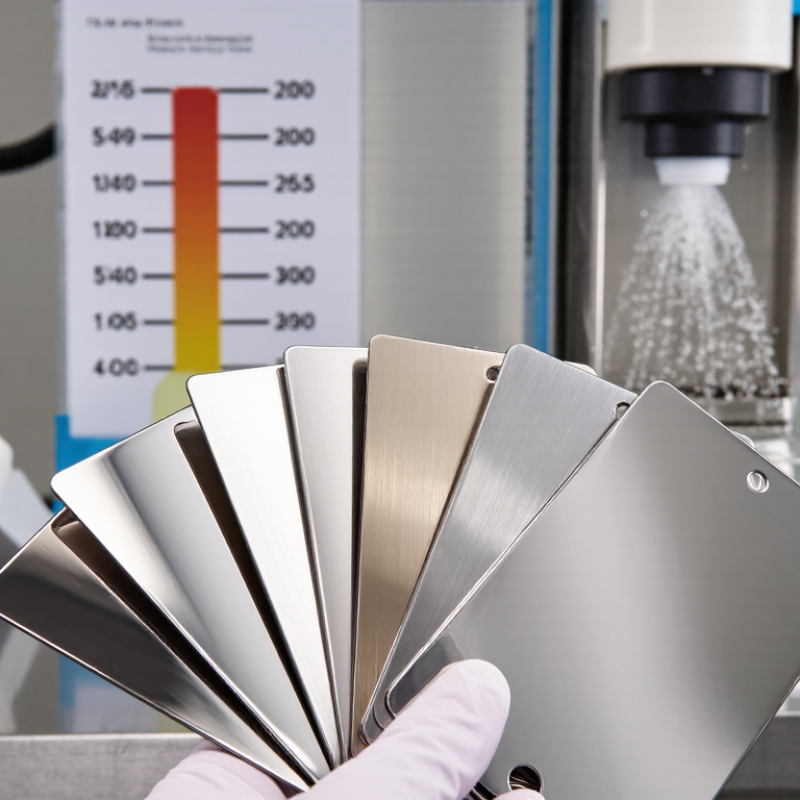
Stainless steel selection begins with the environment, not the grade chart. Identify what will touch the part: fresh water, salt spray, cleaning chemicals, food acids, or process fluids. Even small chloride deposits can trigger pitting, especially in warm, stagnant areas. Small details matter.
Record chemical concentration, temperature, exposure time, and whether conditions change during operation. A tank holding a mild solution at room temperature may face a different risk during hot cleaning or shutdown, when liquid collects in seams. Check for crevices beneath gaskets, overlapping joints, and deposits around welds. These spots can stay wet long after exposed surfaces dry.
Operating conditions matter too. Consider abrasion, vibration, pressure, and repeated heating and cooling. Mechanical wear can damage a passive surface film, while tight crevices limit oxygen renewal. A useful review includes cleaning procedures and maintenance intervals, not just normal production. In practice, records are often incomplete; verify assumptions with operators and inspect existing equipment where possible. Laboratory testing can help, but a small sample may not reproduce a real weld, stagnant pocket, or temperature cycle. Choose materials using the harshest credible combination of conditions, rather than one convenient snapshot.
How to Choose Stainless Steel for Corrosion Resistance
Understand How Stainless Steel Composition Affects Corrosion Resistance
Chromium forms a thin, self-repairing passive film on stainless steel. The International Stainless Steel Forum describes stainless steel as containing at least 10.5% chromium by mass. That threshold matters, but it does not make every grade equally corrosion-resistant. Salt, stagnant water, and tight crevices can still attack the surface.
Molybdenum and nitrogen improve resistance to chloride-driven pitting. A useful, imperfect comparison is the Pitting Resistance Equivalent Number: PREN = %Cr + 3.3 × %Mo + 16 × %N, a composition-based guide discussed in Nickel Institute technical resources. Higher values often indicate better pitting resistance, not immunity. For example, 316’s molybdenum content can help in coastal conditions compared with 304. Actual performance still depends on temperature, surface finish, welds, and exposure. Small details matter.
Tip: For a coastal railing, check the grade certificate for chromium and molybdenum, then consider crevices around fasteners. Rinse salt deposits regularly and inspect welds. PREN is a starting point, not a substitute for testing in the real environment. I’d avoid choosing by grade number alone; that shortcut is convenient, but can be wrong.
For chloride-driven pitting, compare grades using PREN: % chromium + 3.3 × % molybdenum + 16 × % nitrogen. Typical composition-based estimates are about 18–20 for 304, 23–26 for 316, and ประมาณ 34–36 for duplex 2205. These ranges reflect common grade compositions cited in stainless-steel technical guidance from the Nickel Institute; mill chemistry can shift the result. Higher PREN generally indicates better pitting resistance, not immunity. A PREN ranking is a shortcut, not a verdict.
Crevice corrosion can attack beneath a gasket or a deposit, even when the exposed surface looks sound. In warm, salty service, 316’s molybdenum often improves resistance over 304, while duplex 2205 offers a stronger option when chloride exposure is severe. ASTM G48 provides standardized methods for comparing pitting and crevice resistance in ferric chloride. Test results are not direct predictions of service life: temperature, weld condition, stagnant liquid, and surface finish matter. Acid corrosion needs its own evaluation; one grade does not suit every acid.
Tips: Match the test to the failure mechanism. Check welded samples, not only polished coupons. Remove trapped salt and avoid tight crevices where practical. I would verify the actual process chemistry before choosing by grade number alone.
Choosing stainless steel means matching the grade to the conditions it will face, not simply choosing the most corrosion-resistant option. Identify the fluid, temperature, cleaning chemicals, and likely exposure time. A sink exposed to mild detergents has different demands from piping that regularly contacts saltwater. Details matter.
Grade 304 suits many indoor and general-purpose environments. Where chlorides are present, such as coastal air or de-icing salt, grade 316 may offer better resistance because it contains molybdenum. It is not immune to corrosion. Warm, stagnant brine can still cause pitting, especially in crevices beneath gaskets or deposits. For stronger chemical exposure or elevated temperatures, a specialist may compare higher-alloy or duplex grades against the actual operating conditions. More alloy is not automatically better; fabrication, surface finish, and maintenance also affect performance. A polished surface may be easier to clean, but it cannot compensate for a poorly matched grade.
Tips: Ask for the exact chemical concentration and temperature, not just the fluid name. Check welds, joints, and cleaning routines. If conditions vary, document the worst credible exposure before selecting a grade.
| Grade | Alloy family | Indicative PREN range | Corrosion performance | Typical application fit | Important limitations |
|---|---|---|---|---|---|
| 430 | Ferritic stainless steel | About 16–18 | Provides useful resistance in mild atmospheric and indoor environments; performs well in many household and mildly corrosive settings. | Appliance panels, indoor trim, food-service surfaces, and components exposed to mild conditions. | Less resistant than 304 or molybdenum-bearing grades to chlorides and many acids. Not generally preferred for sustained marine exposure or demanding welded service. |
| 304 / 304L | Austenitic stainless steel | About 18–20 | Good general-purpose resistance to atmospheric corrosion and many mild chemical environments. The low-carbon 304L variant helps reduce sensitization risk after welding. | Food-processing equipment, tanks, architectural components, and indoor or rural outdoor service. | Can pit or suffer crevice corrosion in chloride-bearing water, especially when warm, concentrated, stagnant, or under deposits. Not immune to chloride stress-corrosion cracking. |
| 316 / 316L | Molybdenum-bearing austenitic stainless steel | About 23–28 | Improved resistance to chloride pitting and crevice corrosion compared with 304. The 316L variant is commonly selected for welded equipment to reduce sensitization risk. | Coastal atmospheric service, chemical-processing equipment, and food or pharmaceutical equipment exposed to some chlorides. | Not suitable for every seawater, warm brine, or concentrated chloride condition. Pitting, crevice corrosion, and chloride stress-corrosion cracking remain possible. |
| 2205 | Duplex stainless steel | About 34–36 | Higher resistance to chloride pitting and crevice corrosion than 316L, with good resistance to chloride stress-corrosion cracking and higher strength than common austenitic grades. | Chloride-bearing process equipment, pressure vessels, offshore components, and some seawater-handling applications when properly designed. | Welding procedures and heat input require control to maintain the desired phase balance and corrosion performance. It is not immune to corrosion in severe crevices or all acids and temperatures. |
| 904L | High-alloy austenitic stainless steel | About 34–36 | High nickel and molybdenum content provides strong resistance in selected acidic environments and improved resistance to chloride-related localized corrosion over 316L. | Selected sulfuric-acid service, chemical-processing equipment, and applications where the specific process chemistry is compatible with the alloy. | Performance depends strongly on acid concentration, temperature, impurities, and flow conditions. Confirm suitability against corrosion data for the exact process; higher alloy content also increases material cost. |
| 254 SMO (UNS S31254) | Super-austenitic stainless steel | Typically above 42 | Very high molybdenum and nitrogen content gives strong resistance to pitting and crevice corrosion in many severe chloride environments. | Seawater systems, desalination equipment, and other demanding chloride-bearing services where austenitic fabrication is desired. | Not corrosion-proof: stagnant zones, tight crevices, deposits, elevated temperatures, and unsuitable process chemistry can still cause attack. Verify design conditions and welding requirements. |
Selection note: PREN (Pitting Resistance Equivalent Number) is an approximate comparison tool, commonly estimated as %Cr + 3.3 × %Mo + 16 × %N. The ranges shown are indicative and vary with product chemistry; PREN alone does not predict performance in every environment. Confirm the exact grade, product form, fabrication condition, temperature, chloride level, pH, and cleaning regime against application-specific corrosion data.
Stainless steel selection should begin with the actual exposure, not a broad label such as “outdoor use.” Chloride spray, warm moisture, trapped food residue, and cleaning chemicals create different risks. A grade that performs well on an open, rain-washed surface may pit inside a damp crevice. Small details matter. Check whether water drains freely and whether joints can be inspected.
Fabrication can change performance. Keep stainless steel separate from carbon-steel grinding dust, which can leave contamination that later rusts. Weld discoloration should be removed using a procedure suited to the alloy and project requirements. Passivation may help restore the surface, but it cannot compensate for poor weld quality or rough, residue-trapping finishes. Not always. A more corrosion-resistant grade is not automatically the better choice if it is difficult to fabricate or maintain.
Maintenance plans deserve equal attention. Specify fresh-water rinsing where salt deposits can collect, and avoid cleaners that may introduce harmful chlorides. Use dedicated nonmetallic or stainless-compatible tools; ordinary steel wool can leave particles behind. Check applicable standards before ordering: ASTM A240 covers stainless plate, sheet, and strip requirements, while ASTM A967 addresses chemical passivation treatments. These documents do not replace project specifications or exposure testing. One point worth challenging is whether the inspection schedule is realistic; a material that needs frequent cleaning may not suit an inaccessible installation.
Match the grade to the fluid, temperature, cleaning chemicals, and exposure time. Details matter.
Grade 304 often suits indoor equipment exposed to mild detergents. Check the actual chemicals and operating temperature before choosing.
Grade 316 may resist chloride exposure better, such as coastal air or de-icing salt. It is not corrosion-proof.
Yes. Warm, stagnant brine can cause pitting, especially beneath gaskets or trapped deposits. Crevices deserve attention.
No. A smoother surface may be easier to clean, but it cannot fix a poorly matched grade or bad joint design.
Carbon-steel grinding dust can contaminate stainless steel and later leave rust spots. Keep tools and work areas separate.
Rinse away salt deposits with fresh water where needed. Avoid cleaners that introduce harmful chlorides, and use compatible tools.
Confirm the project requirements, exposure conditions, and relevant material specifications. Also ask whether the inspection schedule is realistic. I may be oversimplifying, but inaccessible parts are easy to neglect.
Choosing stainless steel for corrosion resistance starts with understanding the environment and operating conditions, including the chemicals present, temperature, moisture, and exposure duration. What factors affect stainless steel corrosion resistance include its alloy composition, the specific corrosion mechanism, and how the material will be used. Elements such as chromium, molybdenum, and nickel can influence performance, but no single grade is best for every setting.
Compare grades according to the relevant risk, such as general corrosion, pitting, or crevice corrosion, then match a suitable option to the application’s required service life and performance. Also consider forming, welding, surface finishing, cleaning, and ongoing maintenance, since fabrication and care can affect real-world results. Applicable material standards and project requirements should guide the final selection.
