In 2026, the best stainless steel product is not automatically the shiniest or most expensive one. A kitchen sink, handrail, water tank, and outdoor fastener face different demands. Their price can reflect the steel grade, thickness, surface finish, manufacturing precision, and quality checks—not just the brand name. Small details matter. A thin panel may flex under pressure, while a poorly finished weld can collect dirt or rust sooner in harsh conditions.
Why some stainless steel products are more expensive often comes down to materials and work that are difficult to see. Grade 316, for example, typically costs more than grade 304 because its composition offers better resistance to chloride exposure. Yet paying extra does not guarantee a better fit. The right choice depends on where the product will be used, how it will be maintained, and whether its specifications are clearly documented. Ask for the stated grade, dimensions, finish, and relevant material records. Then compare products on equal terms. That is not always easy. Marketing descriptions can be vague, and a premium label may not explain what changed. This guide examines the features behind higher prices and helps readers weigh upfront cost against expected service life. A careful comparison can prevent both overspending and a premature replacement.
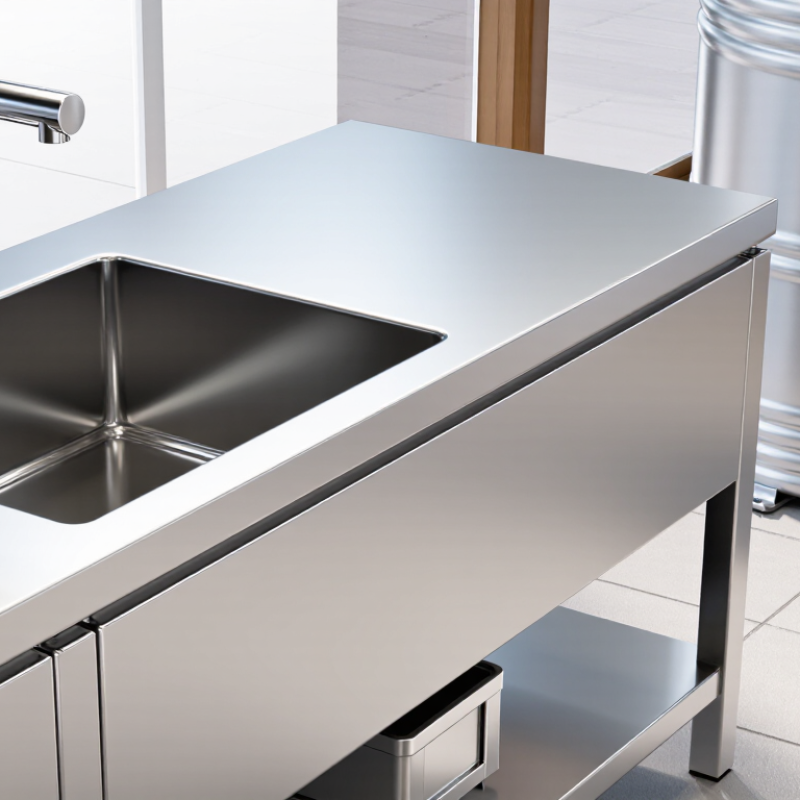
What Stainless Steel Products Are and How They Are Classified
Stainless steel products are items made from iron-based alloys containing at least 10.5 percent chromium. Chromium forms a thin protective surface layer that helps resist corrosion. That layer can renew itself when exposed to oxygen, but dirt, salt, and harsh cleaning can still cause damage. Not rustproof. Products range from kitchen sinks and cookware to pipes, fasteners, medical instruments, and building panels.
A practical way to classify them is by product form: sheet, plate, tube, bar, wire, or finished component. They are also grouped by steel grade, which reflects alloy composition and performance. Austenitic grades are common in food equipment and sinks because they resist corrosion and are readily formed. Ferritic grades appear in some appliances and interior panels. Martensitic grades can be hardened for cutlery and wear-resistant parts. The category alone does not guarantee suitability; the working environment matters.
Surface finish provides another useful distinction. A brushed panel hides fingerprints better than a mirror-polished one, while a rougher finish may be easier to grip. Manufacturers also specify thickness, strength, and corrosion resistance for the intended use. These details help explain price differences: more alloying elements, tighter production controls, and specialized finishing can raise costs. In practice, product labels can blur these categories, so checking the grade and finish is more helpful than relying on appearance alone.
Which Stainless Steel Products Stand Out in 2026
In 2026, stainless steel products stand out when their material, construction, and intended use match. Well-made cookware has even bases that heat steadily and handles secured with neat, durable joints. For sinks, look for reinforced corners, a practical bowl depth, and a finish that hides everyday scratches. Useful details matter. A sleek surface alone does not guarantee long service.
Tips: Check the steel grade and product specifications. Grade 304 suits many indoor kitchen uses; grade 316 may better resist salt exposure. Compare thickness, weld quality, and care instructions, too.
Insulated bottles and food containers are also worth a close look, especially when lids seal reliably and interior surfaces are easy to clean. A polished finish can look impressive, but fingerprints show quickly; that trade-off is easy to underestimate. Higher prices may reflect thicker material, careful fabrication, or longer testing, yet price alone proves little. Ask whether replacement parts are available and whether the product can be repaired. A small flaw in a lid or weld can matter more than a premium coating. Some product descriptions remain vague, so verify the details before choosing.
How Material Grades and Design Affect Product Costs
Stainless steel products can cost more because the grade affects both material price and performance. Common grades differ in chromium, nickel, and other alloy content. These differences influence corrosion resistance, strength, and suitability for particular environments. For example, a product used near salt water may need a more corrosion-resistant grade than one used indoors. That added protection has a price. Still, a higher grade is not automatically the right choice; the actual exposure and maintenance routine matter.
Design also changes the final cost. A thick, precisely formed part may require more steel and extra machining. Deep bends, tight tolerances, polished surfaces, and welded joints can add labor and quality checks. A smooth finish looks simple. It may take several production steps to achieve. I’ve seen buyers focus on the grade alone and overlook these details; that can make comparisons misleading. Some designs also use material inefficiently, and not every premium finish brings practical value.
Tips: Compare products with the same grade, thickness, finish, and dimensions. Ask how the item will be used, especially around moisture, cleaning chemicals, or coastal air. Check whether seams and edges are finished well. A lower-cost option may be adequate, but verify its specifications rather than relying on a label alone.
Why Manufacturing, Testing, and Quality Control Raise Prices
Stainless steel products cost more when manufacturers control chemistry, surface finish, and dimensions across every production run. Alloy choices matter: nickel and molybdenum additions can raise material costs. Tight forming tolerances also mean slower machining and more rejected parts. Small variations count.
worldstainless reported 58.4 million tonnes of global stainless crude steel production in 2023, in its Stainless Steel in Figures 2024 report. High output does not make every batch uniform. Producers still monitor furnace chemistry, heat treatment, and surface condition. A sheet may look clean but fail a buyer’s thickness or finish requirements. Fixing that late can mean rework or scrapped material.
Testing adds labor, equipment, and documentation costs. Depending on the order, checks may include chemical analysis, tensile testing, or corrosion testing. ASTM A240 covers stainless steel plate, sheet, and strip, while ASTM A480 sets general requirements; buyers may also specify extra inspections. Calibrated instruments and traceable test records take time. The difficult part is that not every application needs the same testing, yet skipping a requested check creates risk. Quality control is not free, and it is not a guarantee against every failure.
2026 Best Stainless Steel Products: Why They Cost More?
Alloy content is one reason stainless steel can cost more: 316 includes molybdenum and has a higher nickel specification midpoint than 304. These values are midpoints of commonly specified composition ranges, not measurements of a particular batch or a direct price comparison. Fabrication, testing, and quality control can also add cost; actual prices vary by product, supplier, and market conditions.
How to Compare Upfront Cost With Long-Term Value
Stainless steel often costs more upfront because alloy grade, sheet thickness, fabrication quality, and finish affect material and labor costs. Compare equivalent specifications, not product names: a thin, polished panel is not equal to a thicker, correctly graded one. For a fair comparison, include purchase, installation, cleaning, repairs, replacement, and disposal over the expected service period. NIST Handbook 135 (2022) recommends this life-cycle costing approach instead of judging an item by its purchase price alone. That matters. Still, assumptions count: heavy use, salt spray, and harsh cleaners can change maintenance needs.
Recovery value belongs in the calculation, too. The International Stainless Steel Forum’s 2020 life-cycle report estimates that about 85% of stainless steel is recycled at end of life. This supports a potential scrap credit, though actual value depends on alloy identification and local recovery markets. Don’t treat that credit as guaranteed. For example, compare two kitchen sinks over ten years, including installation, routine cleaning, stain removal, and replacement labor. A cheaper sink may be the sensible choice if it performs adequately and is easy to replace. A premium option may pay off where downtime or frequent replacement is costly. Not always. Ask for the grade, thickness, warranty exclusions, and care instructions in writing; small specification gaps can skew the comparison. Long service life is an estimate, not a promise.
2026 Best Stainless Steel Products: Why They Cost More — How to Compare Upfront Cost With Long-Term Value
The estimates below compare common stainless steel products with lower-cost alternatives. Prices are indicative U.S. retail ranges in USD, excluding tax and installation. Ten-year spending is an illustrative purchase-cost model, not a guaranteed saving: actual lifespan depends on product quality, use, care, and environment.
| Product and comparison unit |
Stainless steel option |
Lower-cost alternative |
Typical upfront price |
Typical service life |
Illustrative 10-year purchase spend |
Why stainless may offer value |
Frying pan
One 10–12 in. pan |
Uncoated stainless steel, commonly 18/10 or 18/8 |
Coated nonstick pan |
Stainless: $25–$60
Nonstick: $15–$40 |
Stainless: often 10+ years with care
Nonstick: commonly 2–5 years, depending on coating and use |
Stainless: about $25–$60
Nonstick: about $30–$200 if replaced every 2–5 years |
An uncoated cooking surface does not rely on a nonstick coating that can wear or scratch. It may suit frequent cooking and can be used at higher temperatures when the pan is designed for it. |
Reusable water bottle
About 500–750 mL |
Food-contact stainless steel, often 304 grade |
Reusable plastic bottle |
Stainless: $15–$35
Plastic: $5–$15 |
Stainless: often 5–10+ years; cap and seal may need replacing
Plastic: varies widely; scratches and wear can shorten use |
Stainless: about $15–$70 if replaced once during the period
Plastic: about $5–$150, depending on replacement frequency |
The body is generally durable and corrosion-resistant. A dent, damaged lid, or worn gasket can still limit service life, so replacement parts and cleaning access matter. |
Kitchen sink
Single-bowl, residential size |
304 stainless steel sink |
Acrylic or other molded-resin sink |
Stainless: about $150–$500
Resin: about $100–$350 |
Stainless: often 15–30 years
Resin: commonly around 5–15 years; product and use vary |
For either type, the initial purchase may cover the full 10 years. Replacement, if needed, can add product and labor costs not included here. |
Stainless resists rust and impact damage in normal kitchen use, though it can scratch or show water spots. Gauge, sound insulation, finish, and installation affect price and performance. |
Outdoor screws
Pack of 100, similar size |
304 stainless steel fasteners |
Zinc-plated carbon-steel fasteners |
Stainless: about $8–$20
Zinc-plated: about $3–$10 |
Stainless: typically better corrosion resistance outdoors
Zinc-plated: coating can wear or corrode, especially in wet conditions |
Highly exposure-dependent. Stainless may need fewer replacements in ordinary outdoor conditions; no reliable 10-year total applies to every climate or installation. |
Corrosion resistance can reduce replacement work and staining around fasteners. For marine or salt-heavy environments, alloy selection matters; 316 stainless generally offers better chloride resistance than 304. |
How to compare value: Consider purchase price, expected replacement frequency, upkeep, repair or installation labor, and the cost of failure—not material price alone. Stainless steel is not automatically the best choice: grade, thickness, construction, finish, and intended environment all affect durability. The ten-year figures are broad examples and exclude maintenance, labor, and inflation.
Conclusion
This article explains what stainless steel products are and how they are classified by their composition, finish, construction, and intended use. It highlights the types of products expected to stand out in 2026, from practical everyday items to carefully engineered options designed for demanding environments. By comparing these categories, readers can better understand how product features and intended applications influence purchasing decisions.
Why some stainless steel products are more expensive comes down to more than appearance. Material grade, design complexity, manufacturing methods, testing, and quality-control procedures can all add to the initial price. The article shows how to evaluate these factors alongside durability, maintenance needs, and expected service life. Considering long-term value, rather than upfront cost alone, can help buyers choose products that better suit their needs and deliver dependable performance over time.
 Elite Steel
