In 2026, stainless steel fasteners are still chosen for their strength and corrosion resistance. But “stainless” does not mean failure-proof. Chloride-rich washdown areas, trapped moisture beneath washers, and mismatched metals can turn a small installation detail into a costly repair. Why stainless steel fasteners fail in some projects often comes down to grade selection, joint design, and installation—not simply poor product quality.
The NACE International IMPACT study estimated global corrosion costs at US$2.5 trillion, or 3.4% of global GDP, using 2013 data. It also estimated that applying corrosion-control practices could save 15–35% of those costs. This is economy-wide context, not a fastener-specific failure rate. Still, it shows why material decisions deserve scrutiny. Corrosion scientist Herbert H. Uhlig defined corrosion as “the destructive attack of a metal by chemical or electrochemical reaction with its environment” in Corrosion and Corrosion Control. That definition matters at the joint level: salt can collect in a narrow crevice, while high installation torque can cause stainless threads to gall and seize. ISO 3506 grades help identify mechanical and corrosion-related properties, but a grade alone cannot account for every exposure or assembly condition. That is where projects can go wrong. A specification may look sound on paper, yet overlook cleaning chemicals, temperature cycles, or contact with another metal. The uncomfortable lesson is that choosing a familiar grade is not the same as verifying the whole connection. This guide examines the failure mechanisms, selection checks, and installation details that can prevent avoidable problems.
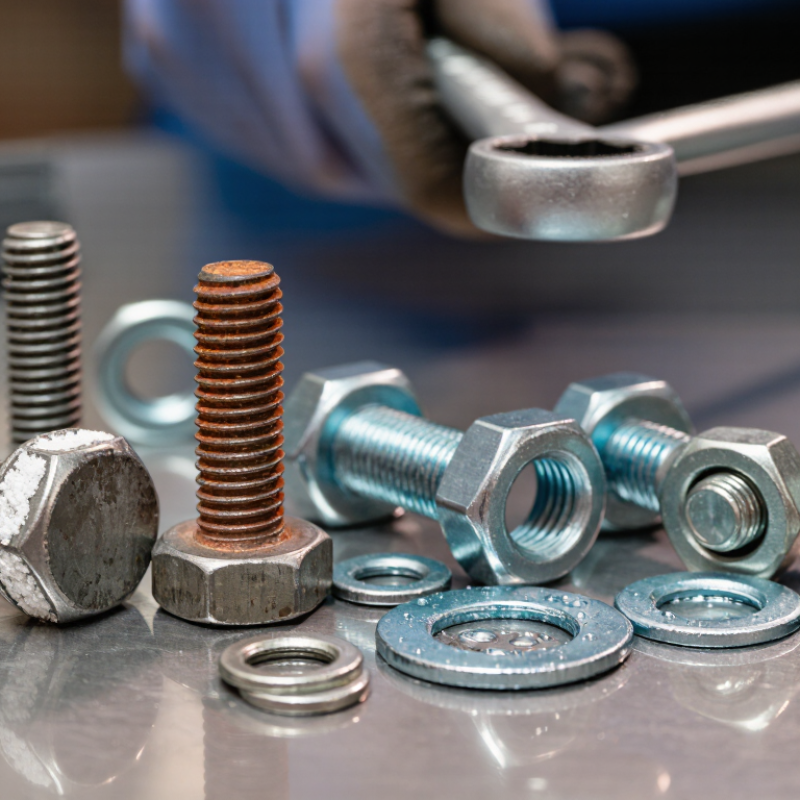
What Stainless Steel Fasteners Are and How They Work
Stainless steel fasteners are bolts, screws, nuts, and washers made from chromium-containing steel alloys. Chromium helps form a thin, protective oxide film on the surface. If scratched, the film can reform when oxygen is present. This helps stainless resist corrosion, but it does not make the metal rustproof. That distinction matters.
A threaded fastener turns rotation into clamping force. As a bolt tightens, its threads pull the joined parts together and stretch the bolt slightly. The resulting tension helps keep the joint secure. Torque is only an indirect guide to that tension; friction under the head and between threads can change the result. Small changes matter. Stainless threads can also gall, or seize, especially when tightened quickly or without suitable lubrication.
The alloy and the surroundings affect performance. Grade 304 suits many everyday indoor and outdoor uses, while grade 316 offers better resistance in chloride-rich settings, such as near seawater. Neither is a universal fix. Trapped moisture, salt deposits, and tight crevices can still encourage corrosion. Dissimilar metals may also create galvanic corrosion when they touch in a wet environment. A shiny head can hide trouble beneath a washer, so choosing the right grade, avoiding over-tightening, and checking the joint periodically are practical steps. A torque value alone can still mislead.
Which Stainless Steel Grades Suit Different Applications in 2026
In 2026, choosing stainless steel fasteners starts with the exposure, not a popular grade number. Grade 304 suits many indoor and general-purpose applications, including equipment frames and dry building interiors. It offers useful corrosion resistance at a reasonable cost. But regular contact with salt or cleaning chemicals can leave staining or pitting.
For coastal equipment, outdoor fittings, and areas exposed to chloride, grade 316 is often a better choice. Its molybdenum content improves resistance to chloride attack, though it cannot prevent every failure. Salt can collect beneath a washer or in a narrow joint. Keep parts clean, and avoid assuming that “marine grade” means maintenance-free. It does not.
Grade 430 can work for decorative or lightly corrosive, dry settings, but it is less suitable for persistent moisture. Grade 410 offers greater strength after heat treatment, yet generally sacrifices corrosion resistance. Duplex 2205 may suit demanding chloride exposure where higher strength is needed, but the full assembly must be compatible. A mismatched nut and bolt can corrode differently, and stainless threads may gall during tightening. Use suitable lubrication and controlled torque. I would verify the actual environment and fastener specification before selecting a grade; the label alone is not enough.
2026 Best Stainless Steel Fasteners: Why They Fail and Which Grades Suit Different Applications
Typical alloy composition helps explain why stainless fasteners perform differently in corrosive environments. Values shown are representative midpoints of common wrought-grade composition ranges, in weight percent; fastener specifications may differ.
Application guide: 304 suits general indoor and mild outdoor use; 316 is a stronger choice for chloride exposure, such as marine environments; 430 is commonly used in mildly corrosive, cost-sensitive applications; duplex 2205 suits demanding chloride environments when its higher strength is useful. Stainless fasteners can still fail through pitting or crevice corrosion, chloride stress-corrosion cracking, galling, contamination, or incorrect grade selection. Check the applicable fastener standard and service conditions.
How to Choose the Best Fastener for Its Environment
A stainless steel fastener can fail even when its grade sounds impressive. The environment decides whether it lasts. Salt spray, trapped moisture, cleaning chemicals, and narrow crevices all change corrosion risk. A bolt beneath a damp deck fitting faces a different exposure from one inside a dry workshop. Looks can mislead.
ISO 9223 classifies atmospheric chloride deposition into four levels. Its S3 category exceeds 300 milligrams per square metre per day, a useful warning for heavily salt-exposed locations. This measure describes atmospheric corrosivity; it does not predict the life of a particular fastener. Still, it helps engineers ask better questions. Is the site coastal? Will salt collect under a washer? Can the joint dry between wettings?
For moderate exposure, 304 stainless steel may be adequate. In chloride-rich settings, 316 stainless steel offers added molybdenum, which improves resistance to pitting. It is not immune. Match the fastener to the surrounding metal, too: dissimilar metals and stagnant water can create trouble at the joint. Check the full assembly, not just the bolt. A small detail often gets missed. Also consider temperature, chemical cleaners, and maintenance access. If exposure data is uncertain, inspect a trial installation before specifying the same fastener everywhere. That extra check may feel fussy, but guessing is worse.
Why Stainless Steel Fasteners Fail: Corrosion, Galling, and Fatigue
Stainless steel fasteners resist rust, but they are not corrosion-proof. Rust still happens. Chloride from coastal air or de-icing salts can damage the passive surface film. Water trapped beneath a washer or inside a thread creates a quiet crevice where corrosion can start. In the field, a brown stain alone does not reveal the cause; residue from a nearby carbon-steel tool can also leave marks. Check the exposure, cleanliness, and fastener grade before deciding a part has failed.
Galling is another common problem. Under pressure, stainless threads can rub, heat up, and seize together, especially during fast installation. It may feel like the bolt simply needs more torque. Often, more force makes the damage worse. Clean threads, controlled tightening speed, and a lubricant approved for the application can reduce risk. Lubrication changes friction, though, so the specified torque may no longer produce the intended preload.
Fatigue develops differently. Repeated vibration or changing loads can grow a small crack near a thread root, where stress is concentrated. The fastener may look sound until it loosens or breaks. Inspect for damaged threads, movement, and uneven loading, and investigate the joint design when failures repeat. A single inspection can miss early cracking. That is worth remembering. Failures rarely have one obvious cause; corrosion, poor preload, and cyclic stress can combine.
How Installation and Maintenance Help Prevent Fastener Failure
Stainless steel fasteners resist corrosion, but they are not failure-proof. Installation can create problems before a structure sees its first season outdoors. Excessive torque may stretch a bolt or damage its threads. Too little torque can let joints loosen under vibration. Follow the specified torque guidance, and use a calibrated wrench rather than relying on feel alone. It is easy to overtrust a familiar tool.
Thread galling is another risk. Stainless threads can seize when friction and pressure build during tightening. Keep threads clean, avoid forcing a bolt that binds, and use a suitable lubricant when the fastener specification allows it. Lubrication changes friction, so the same torque may produce a different clamp load. Check the guidance for the joint, not just the bolt.
Maintenance helps reveal trouble early. Inspect exposed joints for rust staining, looseness, cracked washers, or water trapped around the connection. Pay attention to coastal air, cleaning chemicals, and dissimilar metals; these conditions can increase corrosion risk. Remove dirt and salt deposits with a method compatible with the equipment, then dry areas where moisture collects. Small details matter. If a fastener repeatedly loosens, simply tightening it again may hide a damaged thread, poor alignment, or vibration problem. Stop and examine the joint. A careful inspection can prevent a minor defect from becoming a costly repair.
Conclusion
Stainless steel fasteners join and secure components by using threaded or shaped parts that create a reliable clamping force. In 2026, choosing the right grade matters: common stainless steel options differ in strength, corrosion resistance, and suitability for indoor, outdoor, marine, or chemical environments. The best choice depends on exposure to moisture, salt, chemicals, temperature changes, and mechanical loads—not simply on the fastener’s appearance.
Why stainless steel fasteners fail in some projects often comes down to corrosion, thread galling, fatigue, or a mismatch between the fastener and its environment. Poor installation can also cause problems, including excessive tightening, damaged threads, or uneven loading. Careful material selection, compatible components, correct tightening methods, and routine inspection help reduce these risks. By considering operating conditions from the start and maintaining fastened joints over time, projects can improve reliability and extend service life.
 Elite Steel
